In competitive gaming, most players think the difference between winning and losing is reflex speed or better equipment.
But once you move beyond beginner level, you start to notice something important:
👉 skilled players don’t just play faster — they play smarter.
In 2026, gaming has become more competitive than ever. Whether you’re playing FPS games, battle royales, or MOBAs, the gap between average players and high-ranked players often comes down to strategy, not mechanics alone.
This guide breaks down practical strategies that many casual players overlook but pros consistently use.
1. Positioning Is More Important Than Aiming
Most beginners focus heavily on aim training. While aim matters, positioning often decides fights before they even begin.
Good positioning means:
- having cover nearby
- controlling high ground
- avoiding open areas
- anticipating enemy movement
A player with average aim but strong positioning will often beat a player with great aim but poor awareness.
In simple terms:
👉 don’t just react — place yourself where you already have the advantage.
2. Sound Awareness Gives You Free Information
In competitive games, sound is one of the most underrated tools.
Footsteps, reloads, and ability sounds can reveal:
- enemy direction
- distance
- timing of attacks
Many players ignore sound or play without proper audio settings.
Pro players, however:
- use headphones
- adjust sound balance
- listen before moving
Sometimes, what you hear is more valuable than what you see.
3. Don’t Always Rush — Control the Tempo
A common mistake is playing too aggressively all the time.
While aggression can work in some situations, good players know when to slow down.
Controlling tempo means:
- deciding when to fight
- deciding when to wait
- forcing enemies into mistakes
If you always rush, you become predictable. And predictable players are easy to counter.
Sometimes, patience is more powerful than speed.
4. Learn Enemy Behavior Patterns
Every game has patterns:
- how players rotate
- where they hide
- how they react under pressure
Instead of focusing only on your own gameplay, start observing opponents.
Ask yourself:
- Where do they usually go after spawning?
- Do they panic under pressure?
- Do they repeat the same strategy?
Once you understand behavior patterns, you can predict actions instead of reacting to them.
That’s where real advantage starts.
5. Map Knowledge Wins More Fights Than Aim
Knowing the map gives you an invisible advantage.
Experienced players know:
- common enemy routes
- safe rotation paths
- hiding spots
- choke points
This allows them to move smarter instead of guessing.
For example, if you already know where enemies are likely to appear, you don’t need fast reflexes — you’re already prepared.
Map knowledge reduces randomness in fights.
6. Utility Usage Separates Good Players from Great Ones
In many games, utilities (grenades, abilities, gadgets) are often ignored or wasted.
But high-level players use them strategically:
- to force enemies out of cover
- to block movement paths
- to gather information
- to delay pushes
A well-timed utility can change the outcome of an entire fight.
The key is not just having tools — it’s knowing when to use them.
7. Don’t Chase Kills — Play for Advantage
One of the biggest mistakes in competitive gaming is chasing kills too aggressively.
Smart players focus on:
- positioning advantage
- resource control
- survival rate
Kills come naturally when you have control of the situation.
Chasing kills often leads to:
- poor positioning
- unnecessary risks
- easy counter-attacks
Winning consistently is more important than looking flashy.
8. Mental Control Matters More Than Mechanical Skill
Tilt (frustration after losing) is one of the biggest reasons players perform poorly.
When you’re frustrated:
- decision-making becomes rushed
- aim becomes inconsistent
- mistakes increase
Top players stay calm even after losing fights.
They reset mentally instead of carrying frustration into the next round.
Simple rule:
👉 one bad round should never affect the next one.
9. Play With a Purpose, Not Just for Fun
There’s nothing wrong with playing for fun, but improvement requires intention.
Instead of just playing matches, ask:
- What am I trying to improve today?
- Did I make positioning mistakes?
- Was my decision-making correct?
Even small reflection improves long-term performance.
Without purpose, progress becomes random.
10. Watch Better Players (But Study, Don’t Copy)
Watching skilled players is useful, but only if you analyze properly.
Don’t just watch for entertainment. Instead:
- observe positioning
- study decision-making
- notice timing of attacks
- understand movement patterns
Then adapt those ideas into your own gameplay style.
Copying without understanding rarely works. Learning does.
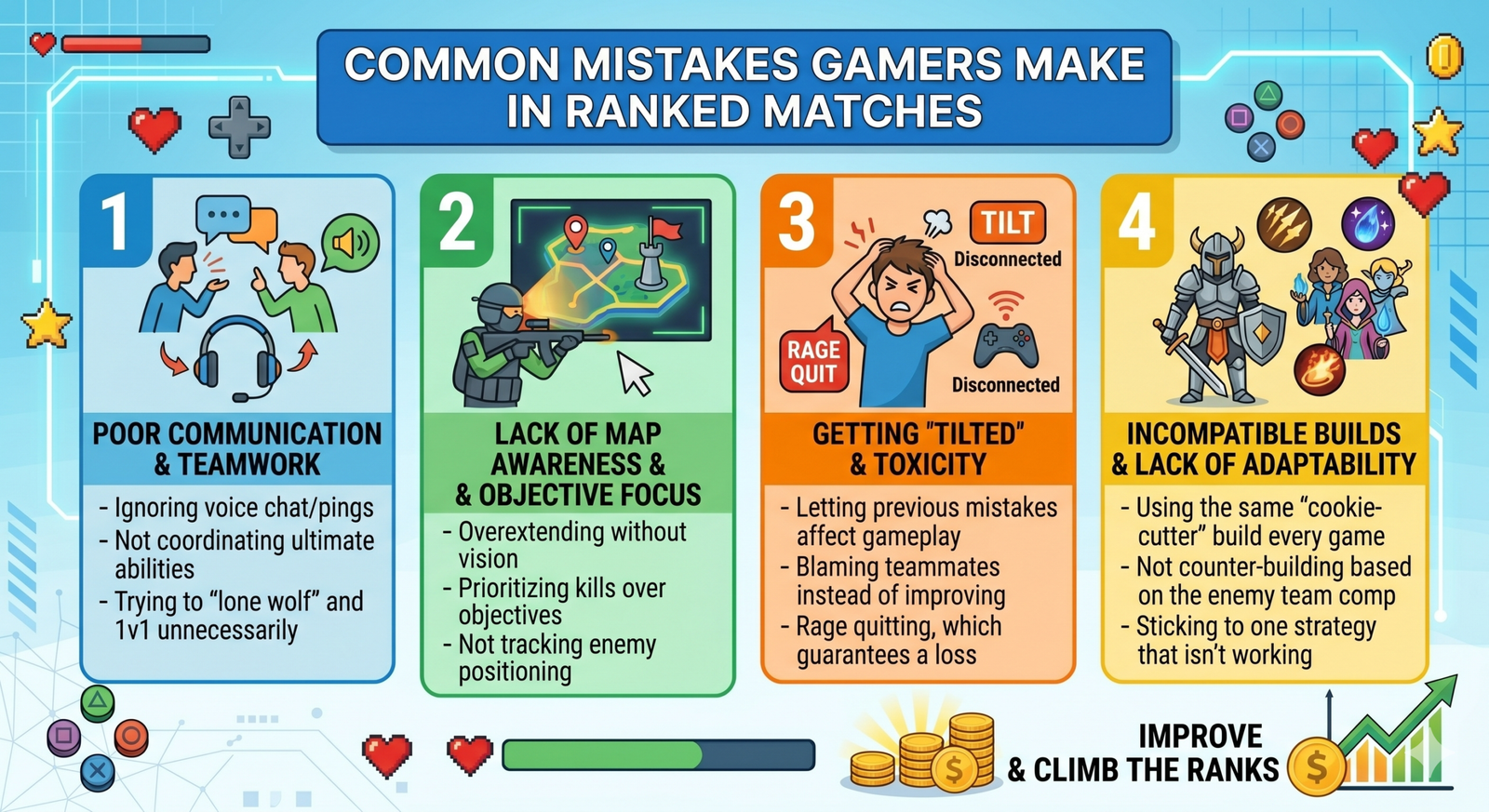
Common Mistakes Most Players Make
Even experienced players fall into these habits:
- over-peeking without cover
- ignoring minimap or radar
- playing too aggressively all the time
- not adapting to enemy strategy
- blaming teammates instead of improving
Fixing these mistakes alone can boost performance significantly.
How to Actually Improve Fast
Improvement in gaming doesn’t come from long hours alone.
It comes from:
- focused practice
- reviewing mistakes
- consistent gameplay
- learning from losses
Even 30–60 minutes of intentional improvement is more effective than hours of random play.
Final Thoughts
Most players think winning comes down to reflexes or luck.
But in competitive gaming, the real difference is understanding.
Understanding positioning, timing, behavior, and decision-making.
Mechanical skill helps, but strategy wins consistently.
If you focus on thinking smarter instead of just playing faster, your results will naturally improve over time.
Because in modern gaming, the best players are not just fast.
They are aware, patient, and always one step ahead.